
A stuck boat inspection port or access-port cover can be surprisingly difficult to open. Salt, dirt, dried seals, overtightening, and lack of grip can leave a cover that simply refuses to turn. Before reaching for pliers, a hammer, or another improvised method, there are safer ways to get a stubborn marine access port moving without damaging the cover or surrounding surface.
Why Do Boat Inspection Ports Get Stuck?
Marine inspection ports and access-port covers live in a tough environment. Salt spray, sand, grime, UV exposure, and dried residue can increase friction between the cover and its sealing surfaces. A cover may also have been overtightened the last time it was closed. Over time, these conditions can make a cover that was once easy to turn extremely difficult to open by hand.
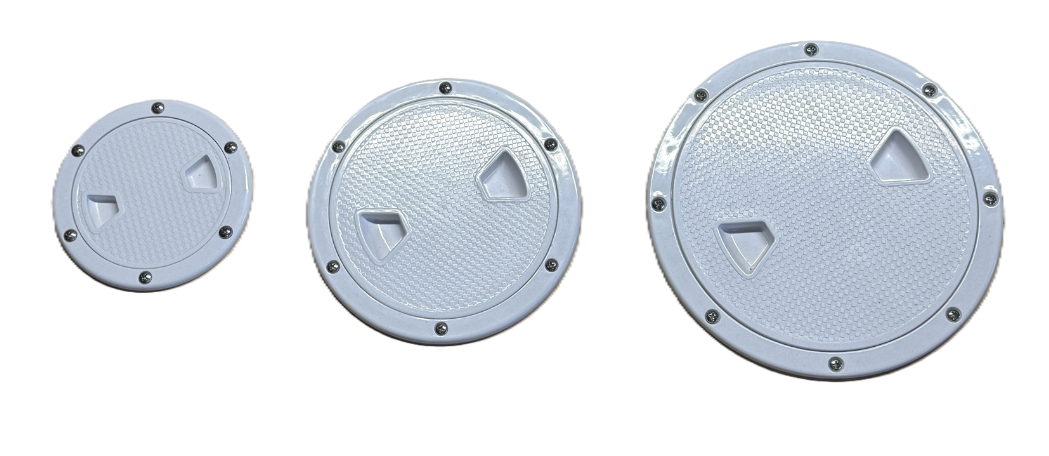
Common Signs an Access-Port Cover Is Binding
A cover that starts easily but becomes harder to turn may have debris in the threads or sealing surfaces. Uneven resistance can indicate that the cover is binding, while a cover that will not move at all may have been overtightened or left closed for an extended period. If the cover begins to deform while you’re trying to turn it, stop and reassess rather than applying more force and reduce unnecessary effort.
What Should You Avoid When a Boat Access Port Is Stuck?
Avoid using pliers, pipe wrenches, screwdrivers, hammers, or other methods that can concentrate force on the cover or surrounding surface. Prying against the deck or striking the cover can damage the port, distort the sealing surface, or leave permanent marks. Applying excessive leverage can also damage the cover rather than freeing it.
How to Open a Stuck Boat Inspection Port Safely
Start by cleaning away any visible sand, salt, or debris around the edge of the cover. Apply steady hand pressure while trying to turn the cover rather than using sudden impacts or excessive force. If the cover has built-in grip features or engagement points, use them to apply force evenly across the cover instead of gripping or prying at one edge.
A Better Grip Can Make the Difference
Many round marine access-port covers provide only small recessed areas or engagement points for turning the cover. When a cover becomes tight, getting enough grip with your fingers can be the biggest challenge. A handle that engages those existing points can provide a more secure, comfortable grip and allow steady turning force to be applied without prying against the surrounding surface.
Using PortGrip on a Stubborn Access-Port Cover
PortGrip is designed to engage the existing hand-grip features of compatible marine access-port covers. Position the fixed and adjustable pins to match the cover, make sure they are fully engaged, and turn the handle by hand using steady pressure. The adjustable pin allows PortGrip to accommodate multiple access-port sizes without prying against the surrounding surface.
After You Get the Access Port Open
Once the cover is open, clean the threads, sealing surfaces, and gasket area before reinstalling it. Remove accumulated sand, salt, or debris and inspect the gasket or O-ring for damage or deterioration. When reinstalling the cover, tighten it only enough to seat and seal properly. Overtightening can make the next removal unnecessarily difficult. A small amount of appropriate lubricant around the contact surfaces can also make removal easier the next time.
Make Stubborn Boat Access Ports Easier to Open
If stubborn access-port covers are a recurring problem on your boat, PortGrip provides a simple way to get a secure grip using the cover’s existing engagement points. It is designed for hand use and adjusts to fit multiple common marine access-port sizes.